

Picking the right mobility aid isn’t just about grabbing the first one you see online. Whether you’re shopping for yourself or someone else, it helps to know the difference between types — especially when it comes to upright rollators vs regular rollators.
They might look kinda similar at a glance, but how they work and feel can be totally different. So, when does it make more sense to go with an upright rollator?
Upright Rollator vs Regular Rollator
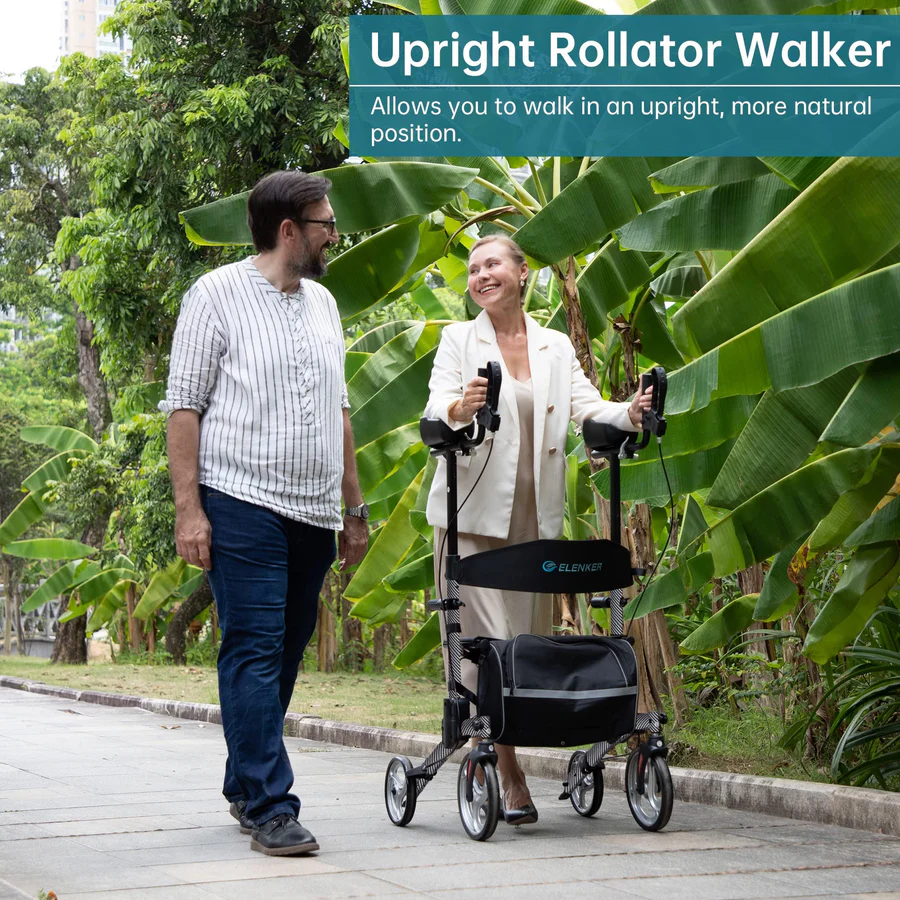
Upright rollators are basically designed to help you stand up straighter while walking. Instead of leaning forward to hold onto low handles, you hold armrest-level supports that encourage an upright, natural posture.
That one tweak changes everything — how your body feels, how you move, and even how confident you feel walking into a room.
So When Should You Go Upright Rollators?
Here are a few common situations where choosing an upright rollator makes way more sense than sticking with the standard version.
1. You’re Dealing with Back or Shoulder Pain
Regular rollators often force you to lean forward a bit, especially if the handles aren’t quite the right height. Over time, that can really mess with your shoulders, neck, or lower back.
If you’re already dealing with arthritis, stiffness, or old injuries, bending over all the time is the last thing you need. Upright rollators support your arms in a more natural, elbow-level position, so you can walk upright instead of slouching. Less tension, less pain, better posture.
2. You’re Tall and Tired of Stooping
If you’re over 5’10”, most standard rollators just don’t fit right. You end up walking hunched over, which throws off your balance and leaves your back sore by the end of the day.
Upright rollators are a taller person’s best friend. The handles and armrests adjust higher, so you’re not fighting your own body just to stay upright. If you’ve ever thought, “Why is this thing made for someone a foot shorter than me?” an upright model might be exactly what you need.
3. You Want Better Balance and Control
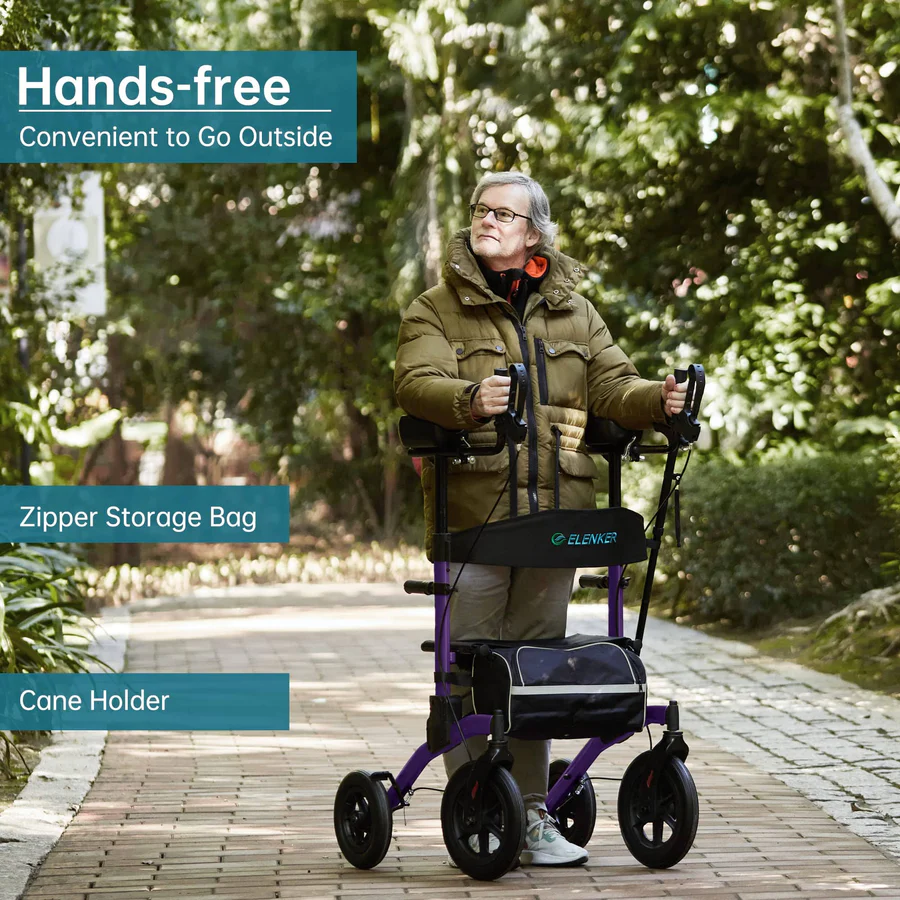
The design of an upright rollator naturally shifts your center of gravity back a bit, which can make you feel more stable on your feet. And since you’re not leaning forward, it’s easier to stay balanced when you hit a bump or crack in the sidewalk.
Plus, many upright models come with forearm supports and ergonomic handles, giving you more control when turning or stopping. If you’ve felt shaky or off-balance using a regular rollator, this setup might feel a whole lot safer.
4. You’re Using It for Long Walks or Daily Errands
If you’re using a rollator every day — whether it’s around the house, to the grocery store, or out for walks — comfort matters. You’re probably not looking to turn every errand into a workout.
Upright rollators are built for longer-term use, especially when you’re on your feet a lot. Since your posture stays more upright, your body doesn’t get as tired or sore after a full day out. It might not seem like a huge difference at first, but after a few hours of walking or standing, you’ll definitely feel it.
5. You’re Recovering from Surgery or Injury
After certain surgeries — especially those involving the spine, hips, or shoulders — your doctor may recommend avoiding bending or slouching while healing.
An upright rollator lets you stay mobile without putting extra strain on healing muscles or joints. It supports your posture and gives you a comfortable, steady way to get around, without risking injury from poor alignment.
Just make sure to check with your physical therapist or healthcare provider before switching to a new mobility device.
6. You Want a More Confident, Engaged Walk
Here’s something people don’t talk about enough: how you feel emotionally when using a mobility aid.
Some folks feel more confident and connected when they can look up, make eye contact, and engage with the world. Upright rollators let you do that. You’re not staring at the floor the whole time or ducking your head to talk to someone. You’re standing tall — and that can make a big difference in how you feel around others.
7. You Struggle with Grip or Hand Strength
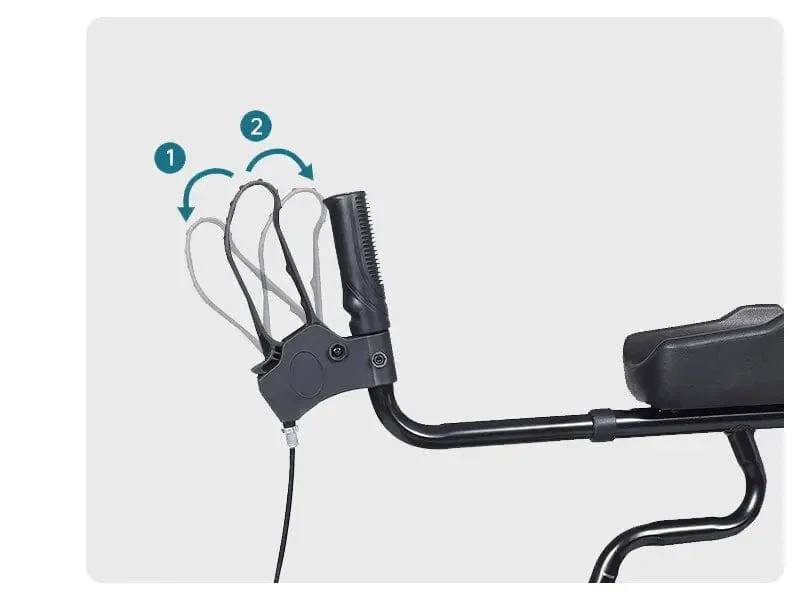
If gripping standard rollator handles is tough due to arthritis, nerve damage, or weakness, upright models offer a different kind of support. Many upright rollators have padded forearm rests and loop-style brakes you can squeeze without a ton of pressure.
This setup helps reduce hand strain and gives you a more stable feel while walking. It can also help you feel safer if you’ve ever felt your hands slipping or cramping up with traditional handles.
What Upright Rollators Might Not Be Great For
While upright rollators have a lot going for them, they’re not perfect for everyone. A few things to consider:
They can be heavier and bulkier than regular rollators, especially when folding for transport.
Might not fit smaller spaces as easily, like tight hallways or crowded bathrooms.
Some users prefer leaning slightly forward for stability — and upright models don’t allow that.
They’re usually a bit more expensive than standard models.
So if you only use a walker occasionally or need something super compact, a regular rollator might still be the better pick.
Choosing between a regular rollator and an upright one isn’t just about looks — it’s about comfort, posture, balance, and how you feel using it every day. If you’re constantly dealing with back or neck pain, if you feel hunched over or off-balance, or if you simply want to move more naturally, an upright rollator could be the way to go.
Of course, the right choice depends on your body and lifestyle. But if standing tall and walking comfortably sounds like a good trade, upright walker just might be your next move.